ONE-STOP SOLUTION SERVICE, CONTACT US NOW! WHATSAPP: +8615093378359 Email: heavyequipmentchina@gmail.com

antimony ore beneficiation process
The antimony ore beneficiation process is a series of mining and mineral processing techniques designed to extract and concentrate antimony from its ores, primarily stibnite (Sb₂S₃). This involves physical separation methods like gravity and chemical processes like flotation to remove impurities (gangue) and produce a high-grade antimony concentrate suitable for smelting or further refining. Commonly used for sulfide ores, the process improves ore quality, with recovery rates often exceeding 79% under optimal conditions. It's particularly relevant for ores from major producers like China, where antimony is used in flame retardants, batteries, and alloys. Antimony ore processing plants transform raw sulfide and oxide ores into high‑purity concentrates that can be refined into metallic antimony or used directly in flame‑retardant and alloy applications. The overall flow typically includes crushing, grinding, gravity or flotation separation, and final concentrate dewatering. This arrangement maximizes recovery while minimizing waste, ensuring the final product meets market specifications for purity and particle size. here in MINGYUAN we can provide one-stop solution for antimoney ore processing plant. contact us for more details by clicking either button below
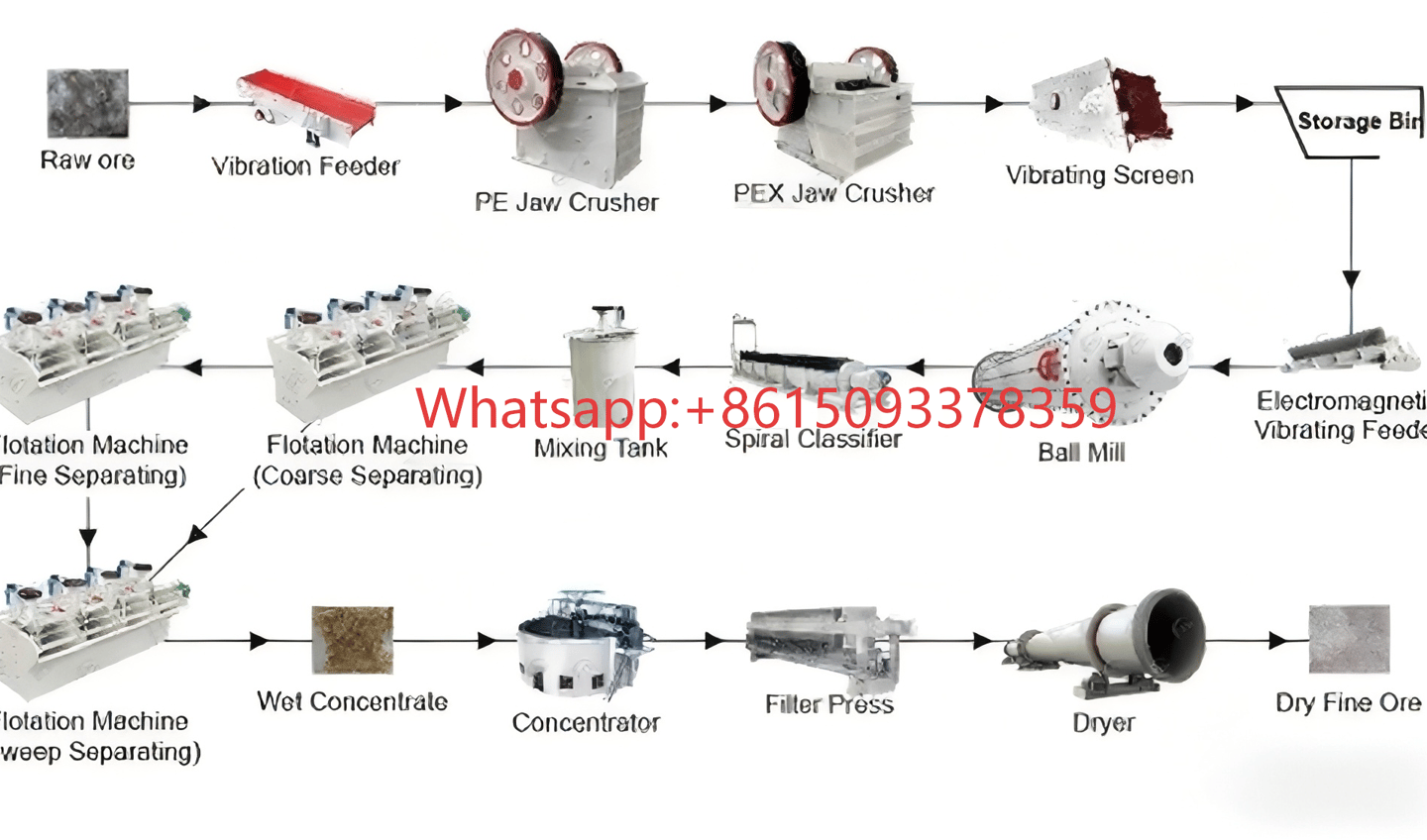
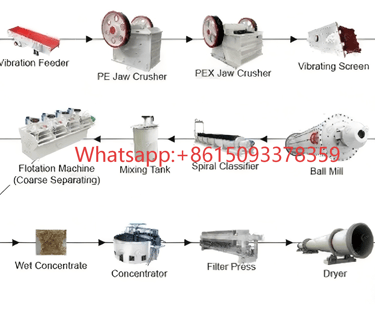
Antimony ore beneficiation typically begins with crushing the raw ore using jaw crushers for primary and secondary reduction to manageable sizes, often down to 10-20 mm particles. This step liberates the antimony minerals from the host rock. Next, the crushed ore undergoes grinding in ball mills to further reduce particle size, usually to below 0.074 mm, ensuring monomer dissociation between antimony sulfide and waste rock for better separation efficiency. Grinding is often staged to avoid over-grinding, which can create slimes that reduce recovery in flotation.
Following grinding, classification using spiral classifiers or hydrocyclones separates finer particles from coarser ones, recycling oversize material back to the mill. This is followed by washing and desliming to remove clay and fine impurities that could interfere with downstream processes.
For coarse-grained ores, gravity separation is employed as an economical pre-concentration step, using equipment like jigs or shaking tables to exploit the density difference (antimony at ~6.6 g/cm³ vs. gangue at ~2.7 g/cm³). This method discards significant gangue early, reducing the load on subsequent stages and is ideal for ores with high monomer dissociation.
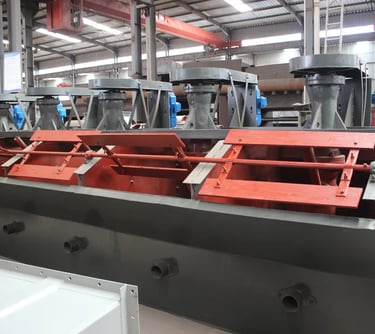
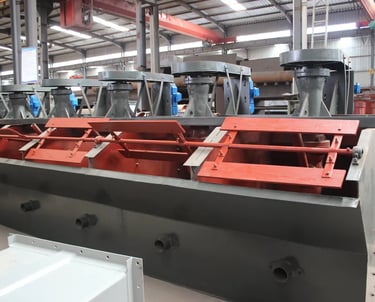
The core of most modern processes is flotation, especially for finer or mixed sulfide-oxide ores. Here, the ore slurry is mixed with collectors (e.g., xanthates), frothers, and activators (like lead or copper salts) in flotation cells. Air bubbles attach to hydrophobic antimony particles, floating them to the surface as concentrate while hydrophilic gangue sinks as tailings. Flotation can achieve concentrates grading over 60% Sb, with multiple stages (rougher, scavenger, cleaner) for refinement. For polymetallic ores (e.g., with lead, zinc, or gold), differential flotation separates minerals sequentially.
Finally, the concentrate is dewatered via thickeners and filters, and tailings are managed for environmental compliance. In some cases, hand selection is used for very coarse, high-grade lumps as a low-cost initial step. The choice of method depends on ore type, with combined gravity-flotation flowsheets being common for optimal recovery.
Stibnite ore beneficiation process
Stibnite (Sb₂S₃) is the primary sulfide mineral in antimony deposits. In a dedicated stibnite beneficiation plant, the ore is first crushed and ground to liberate the mineral from gangue. Gravity separation is often employed for coarse‑grained stibnite, using jigs or shaking tables to exploit its high density. For finer particles, froth flotation becomes the dominant method, where the sulfide is floated using collectors such as butyl xanthate or a mixture of shale oil and ethyl sulfide nitrogen, with terpineol oil serving as the foaming agent 2. This step yields a sulfide concentrate typically containing 10–16 % Sb, with recovery rates of 46–49 % under optimal conditions
Antimony Ore Beneficiation Process
When processing mixed sulfide‑oxide ores, a comprehensive beneficiation plant integrates both gravity and flotation circuits. Oxide minerals, which are difficult to float, are separated by gravity concentration after the sulfide fraction has been removed. The combined approach ensures that both sulfide and oxide components are recovered efficiently, producing a mixed concentrate that may require further purification 4. Laboratory studies often simulate different scenarios to determine the best flowsheet for a given ore composition, balancing grade and recovery
Antimony Concentrator
An antimony concentrator focuses on maximizing the concentration of Sb in the final product. It typically consists of a primary crushing‑grinding circuit followed by gravity separation for coarse stibnite and flotation for finer sulfide particles. Advanced concentrators may incorporate electrostatic separation or ore sorting to improve selectivity, especially when the ore contains complex mineral associations such as pyrite, arsenopyrite, and galena 3. The concentrator’s design aims to achieve the highest possible Sb grade in the concentrate while minimizing energy and water consumption.
Antimony Ore Dressing Plant
The ore dressing plant (or dressing plant) refines the concentrate produced by the concentrator. After flotation, the concentrate undergoes thickening and vacuum filtration to dewater the slurry, producing a filter cake that can be further processed or sold as a concentrate. Some plants employ roasting or thermal oxidation to convert sulfide concentrates into oxide concentrates, which are then packaged for downstream metallurgical use 4. This stage ensures the final product meets industry standards for purity and particle size, facilitating its use in flame retardants, alloys, and semiconductor applications.
Main Equipment For Antimony Ore Beneficiation Process
Our strength lies in our individuality. Set up by Esther Bryce, the team strives to bring in the best talent in various fields, from architecture to interior design and sales.
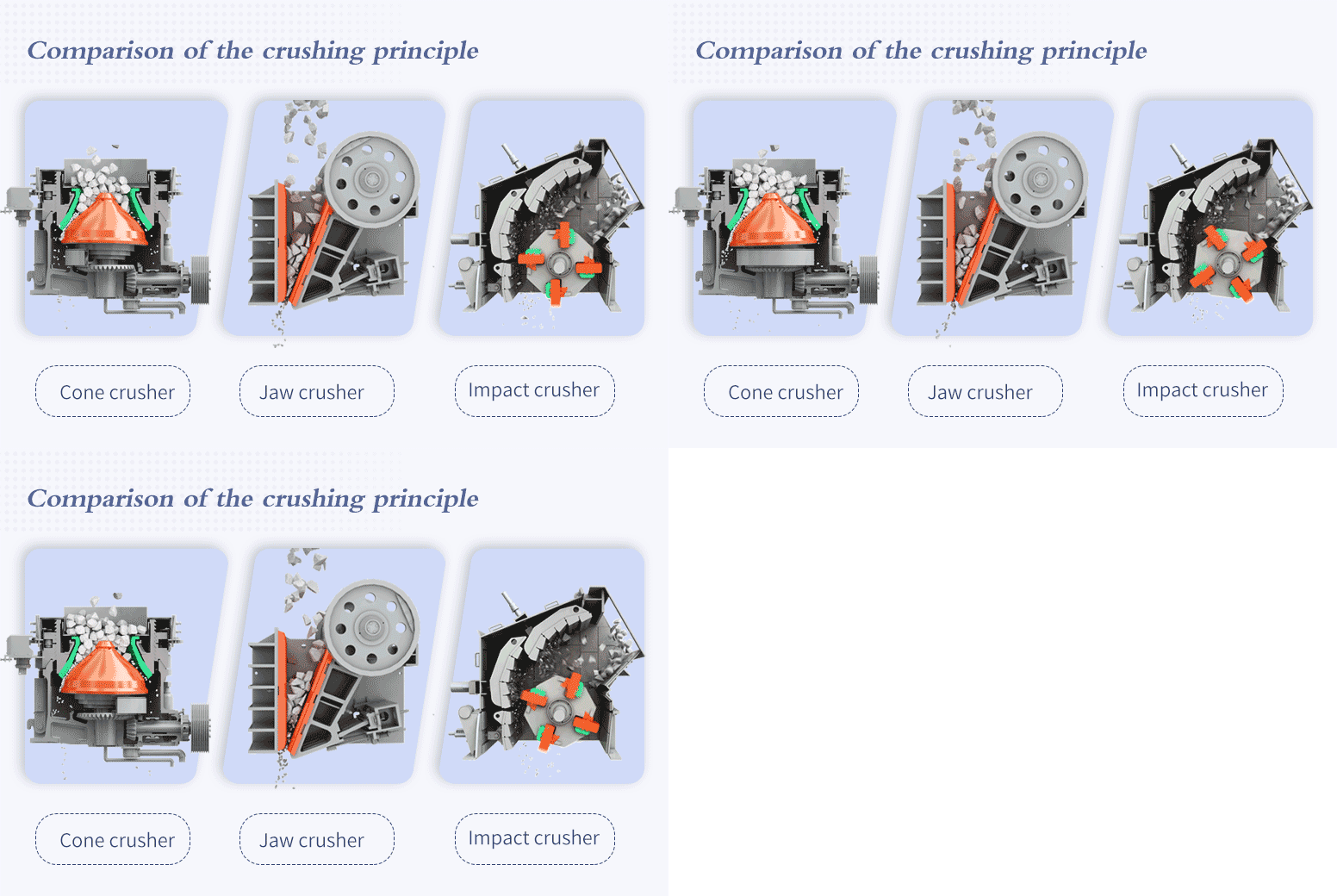
Antimony Ore Crusher
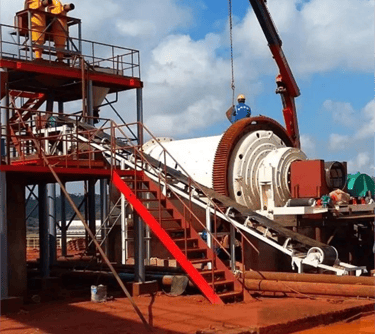
Antimony Ore Ball Mill
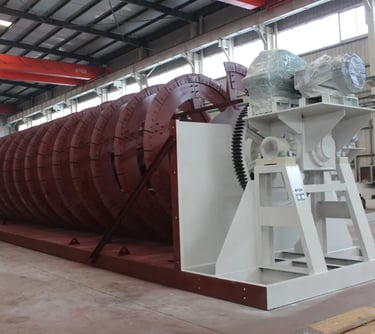
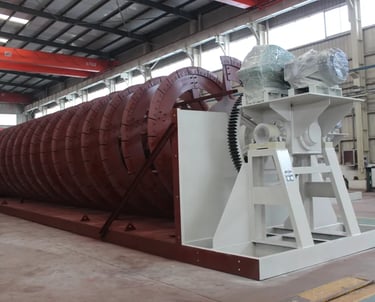
Antimony Ore Classifier